


- 1. What Are Food Aluminum Bottles?
- 1.1 How Are Food Aluminum Bottles Different from Common Packaging?
- 2. Why Should Food and Beverage Businesses Consider Food Aluminum Bottles?
- 2.1 Better Protection from Light Exposure
- 2.2 Stronger Brand Presentation
- 2.3 Suitable for Recyclable Packaging Direction
- 3. Common Applications of Food Aluminum Bottles
- 3.1 Drinking Water and Bottled Beverages
- 3.2 Bottled Coffee
- 3.3 Juice and Plant-Based Milk
- 3.4 Sauces, Condiments, and Edible Oil
- 4. Technical Specifications of VAB Food Aluminum Bottles
- 4.1 General Specifications
- 4.2 Reference Capacity, Diameter, and Height Table
- 4.3 Why Capacity Alone Is Not Enough
- 5. 99.7% Aluminum Material and Its Role in Food Packaging
- 5.1 Lightweight, Durable, and Rust-Free
- 5.2 Supports Recyclable Packaging Direction
- 6. Internal Coating and Product Compatibility
- 6.1 Food-Safe Internal Coating, Non BPA
- 6.2 When Should Internal Coating Be Reviewed More Carefully?
- 7. Neck Finish, Closures, and Sealing Requirements
- 7.1 Common Neck Finish Options
- 7.2 Closures Should Not Be Selected Last
- 8. Printing and Surface Finishing for Food Aluminum Bottles
- 8.1 Offset Printing from 1 to 8 Colors
- 8.2 Silk Screen Printing and Finishing Options
- 9. Food Aluminum Bottles in B2B/OEM Projects
- 9.1 What Can VAB Support for OEM Customers?
- 9.2 When Should Samples Be Developed?
- 10. Information Buyers Should Prepare Before Project Discussion
- 10.1 Product Information
- 10.2 Packaging Information
- 10.3 Commercial Information
- 11. Notes on Using Website Specifications
- 12. Conclusion
Introduction to Food Aluminum Bottles for Beverages and Liquid Food Products
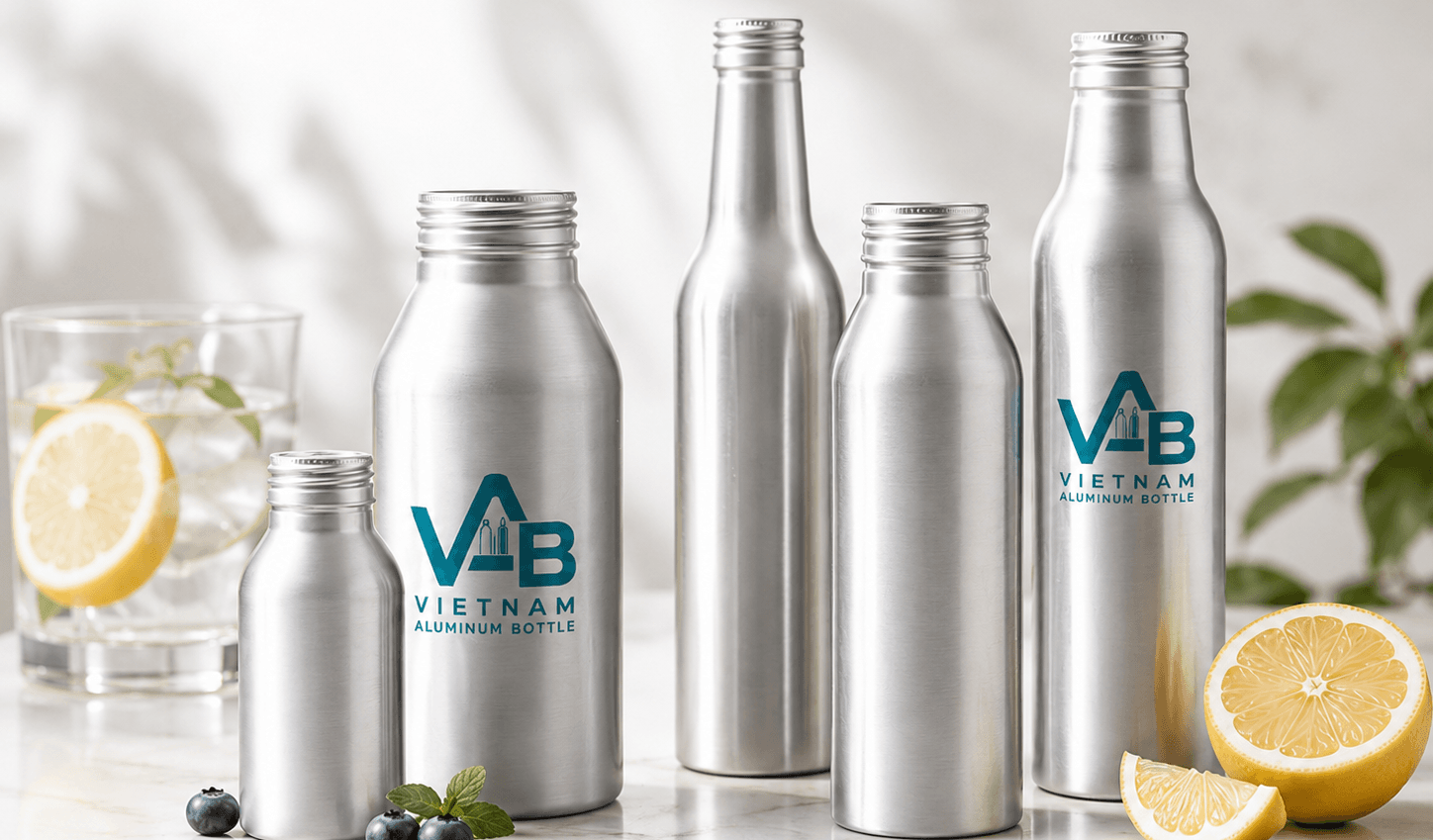
Food aluminum bottles are aluminum packaging solutions used for food and beverage products, especially drinking water, coffee, juice, plant-based milk, sauces, condiments, edible oil, and liquid food products that require lightweight, durable packaging with better protection from light exposure and stronger brand presentation.
For B2B/OEM customers, choosing a food aluminum bottle is not simply about selecting an available bottle model. Buyers need to evaluate the filled product, capacity, neck finish, closure type, internal coating, filling process, printing requirements, packaging, and target market standards together.
VAB develops food aluminum bottles to support businesses in packaging selection, sampling, specification confirmation, and project-based production. This article helps buyers understand the role, applications, technical specifications, and key points to confirm before moving deeper into production discussion.
What Are Food Aluminum Bottles?
Food aluminum bottles are aluminum bottles designed for food and beverage applications, with internal surface treatment suitable for the confirmed scope of each project. This product line is commonly used for products that need durable, lightweight packaging, printable surfaces, and better protection from light exposure.
According to VAB documents, food aluminum bottles are positioned for drinking water, coffee, juice, plant-based milk, sauces, condiments, edible oil, and liquid food products. These product groups have different requirements for capacity, closure, coating, packaging, and usage conditions, so each project should be reviewed individually instead of applying one generic configuration to everything.
How Are Food Aluminum Bottles Different from Common Packaging?
Food aluminum bottles offer three important points for B2B/OEM brands.
First, aluminum creates a packaging feel that is sturdy, modern, and more premium. This matters for products that need to stand out on shelves, in e-commerce, or in premium distribution channels.
Second, aluminum bottles are not transparent, so they can help reduce light exposure to the product inside. For certain beverages, edible oil, sauces, or liquid food products, this can be an important packaging factor.
Third, aluminum bottle surfaces can support offset printing, silk screen printing, color coating, gloss coating, or finishing options based on brand identity. For OEM projects, this customization potential helps businesses develop packaging around their own brand image instead of relying on generic packaging.
Why Should Food and Beverage Businesses Consider Food Aluminum Bottles?
Better Protection from Light Exposure
One reason businesses consider food aluminum bottles is their ability to limit light exposure. For products such as coffee, juice, edible oil, sauces, or condiments, light may affect color, flavor perception, or product stability.
Aluminum bottles create a non-transparent packaging structure that can support product protection during storage, transportation, and distribution. However, final suitability does not depend on aluminum material alone. Buyers still need to confirm the internal coating, filled product, storage conditions, filling process, and target market requirements.
Stronger Brand Presentation
In the food and beverage industry, packaging directly affects buyer perception. A product with a strong formula but weak packaging may lose perceived value. Better packaging helps the product look more professional from the first point of contact.
Food aluminum bottles have a modern metal surface that can create a clean, sturdy, and premium impression. For brands developing drinking water, coffee, juice, edible oil, sauces, or convenient beverage products, aluminum bottles can help improve recognition and differentiation.
Suitable for Recyclable Packaging Direction
Aluminum is a highly recyclable material. This makes it relevant for brands looking for more sustainable packaging directions, lower dependence on plastic packaging, or improved material perception among consumers.
However, sustainability communication should stay precise. It is reasonable to say aluminum is recyclable. It is not wise to turn that into absolute environmental claims without market-specific supporting data. Greenwashing is a very efficient way to make serious buyers ask very long questions.
Common Applications of Food Aluminum Bottles
Drinking Water and Bottled Beverages
Food aluminum bottles can be suitable for drinking water, convenient beverages, functional drinks, or products that need lightweight, durable packaging with a more distinctive appearance than common packaging formats.
For beverage projects, buyers should confirm target capacity, filling process, closure, sealing requirements, storage conditions, packaging, and target market before selecting a bottle configuration.
Bottled Coffee
Ready-to-drink coffee, cold brew, and bottled coffee products often require packaging that feels premium and different. Food aluminum bottles can support stronger visual presentation, especially when combined with printing, color coating, and brand design.
However, coffee has its own requirements related to flavor, color, storage conditions, and compatibility with internal coating. Coffee projects should therefore be evaluated carefully before confirming samples.
Juice and Plant-Based Milk
Juice and plant-based milk products require careful review of formulation, stability, filling conditions, and storage. It should not be assumed that every food aluminum bottle is automatically suitable for every formula.
For this group, customers should provide product information, basic formulation details if needed, storage conditions, filling process, expected shelf life, and target market so VAB can review the suitable project scope.
Sauces, Condiments, and Edible Oil
Food aluminum bottles can also be considered for sauces, condiments, edible oil, and liquid food products that require sturdy packaging, easier transportation, and stronger brand presentation.
For products with oil, flavoring, viscosity, or specific formulation characteristics, buyers should confirm the internal coating, closure type, pouring behavior, sealing requirements, packaging, and user experience. A beautiful bottle that pours badly is only beautiful before anyone uses it. Very poetic. Not very commercial.
Technical Specifications of VAB Food Aluminum Bottles
General Specifications
VAB food aluminum bottles have the following reference specifications:
| Item | Reference specification |
|---|---|
| Product line | Food aluminum bottles |
| Material | 99.7% pure aluminum |
| Capacity | 50ml – 650ml or project-based specifications |
| Diameter | 45mm – 66mm |
| Height | 90mm – 240mm, excluding closure |
| Body thickness | 0.32 – 0.44mm |
| Neck finish | 24mm / 28mm / 38mm |
| Internal surface treatment | Food-safe internal coating, Non BPA |
| Printing | Offset printing from 1 to 8 colors, silk screen printing, or project-based requirements |
| Bottle shape | Round shoulder, sloped shoulder, or project-based design |
| Applications | Drinking water, coffee, juice, plant-based milk, sauces, condiments, edible oil, liquid food products |
| Reference MOQ | 30,000 bottles, depending on model and technical requirements |
These specifications are for initial buyer evaluation. Final production specifications must be confirmed based on the filled product, filling process, closure type, internal coating, printing requirements, approved sample, and target market.
Reference Capacity, Diameter, and Height Table
| Capacity | Diameter | Height | Application note |
|---|---|---|---|
| 50ml | 45mm | 90mm | Suitable for samples, small products, mini beverages, or trial products |
| 100ml | 45mm | 120mm | Suitable for small beverages, coffee, juice, or pilot market products |
| 150ml | 45mm | 140mm | Suitable for juice, coffee, plant-based milk, or compact beverage formats |
| 250ml | 53mm | 160mm | Suitable for beverages, sauces, condiments, or medium-volume liquid food products |
| 330ml | 59mm | 175mm | Suitable for drinking water, bottled beverages, coffee, or juice |
| 500ml | 59mm | 225mm | Suitable for drinking water, edible oil, sauces, condiments, or liquid food products |
| 650ml | 66mm | 240mm | Suitable for edible oil, sauces, condiments, or products requiring larger capacity |
| Project-based | Project-based | Project-based | To be confirmed based on design, closure, coating, MOQ, and production feasibility |
Why Capacity Alone Is Not Enough
Capacity is a starting point, not the whole technical decision. The same 250ml bottle may have different requirements depending on whether the filled product is coffee, juice, sauce, or edible oil.
Buyers should review capacity together with diameter, height, neck finish, closure type, internal coating, body thickness, surface finish, artwork file, and filling process. Choosing a bottle only by capacity is like buying equipment based on paint color. Pleasant to look at, but not exactly how factories stay sane.
99.7% Aluminum Material and Its Role in Food Packaging
Lightweight, Durable, and Rust-Free
According to VAB documents, food aluminum bottles use 99.7% pure aluminum, with reference body thickness from 0.32 to 0.44mm.
Aluminum is lightweight, durable, rust-free, and suitable for many packaging applications that require transportation, warehousing, and large-volume distribution. For B2B/OEM businesses, packaging material affects transportation cost, packing stability, user experience, and product perception.
Supports Recyclable Packaging Direction
Food aluminum bottles are also relevant for brands interested in recyclable packaging materials. VAB positions aluminum bottles as a packaging solution with sustainability advantages and stronger modern brand presentation.
That said, sustainability claims should stay within the right scope. It is appropriate to state that aluminum is recyclable. It is not appropriate to overstate environmental claims without specific supporting data for each market.
Internal Coating and Product Compatibility
Food-Safe Internal Coating, Non BPA
VAB food aluminum bottles use food-safe internal coating and Non BPA treatment according to product documentation. The internal coating helps create a more suitable contact layer between the filled product and the aluminum material.
However, the final coating should be confirmed by project. Drinking water, coffee, juice, plant-based milk, sauces, condiments, and edible oil have different characteristics. Customers should therefore provide product information, storage conditions, filling process, and target market requirements so VAB can review the suitable scope more accurately.
When Should Internal Coating Be Reviewed More Carefully?
Buyers should review internal coating carefully if the product contains oil, flavoring, acidity, sensitive colors, long shelf-life requirements, hot filling, sterilization, or market-specific requirements.
Technical Note on Internal Coating
Internal coating should not be treated as a minor detail. For food aluminum bottles, coating can directly affect packaging suitability for the filled product.
When Deeper Testing May Be Needed
Some products may require further review of compatibility, sealing, storage conditions, or target market requirements. Testing scope should be confirmed by project.
Important Note
Information about internal coating, standards, and technical documents must be confirmed based on actual order data. Website content should not be used as the final technical document for production.
Neck Finish, Closures, and Sealing Requirements
Common Neck Finish Options
The VAB catalogue lists common neck finish options for food aluminum bottles, including 24mm, 28mm, and 38mm. These are reference data points for initial technical discussion.
Neck finish selection should be reviewed together with closure type, filling process, filled product, sealing requirements, seal if applicable, and end-user experience.
Closures Should Not Be Selected Last
For food and beverage products, the closure is a key part of the packaging configuration. It affects sealing, opening, pouring, user experience, product protection after opening, and packaging requirements.
If the bottle is selected first and the closure is considered later, the project may face compatibility, sampling, timeline, and cost risks. This is the classic "save 10 minutes, lose 10 days" packaging tradition. Let's retire it early.
Printing and Surface Finishing for Food Aluminum Bottles
Offset Printing from 1 to 8 Colors
VAB supports offset printing from 1 to 8 colors for food aluminum bottles. This is suitable for brands that need logos, base colors, product information, brand visuals, and design details printed directly on the bottle surface.
Before printing, artwork files should be reviewed by print area, color count, color codes, text size, logo clarity, barcode, and finishing requirements. A beautiful mockup does not mean the production artwork is ready. Sadly, Photoshop still has not replaced prepress.
Silk Screen Printing and Finishing Options
In addition to offset printing, VAB can review silk screen printing or project-based finishing requirements. The catalogue also notes surface options such as matte finish, semi-gloss finish, color coating, gloss coating, and special coating.
Surface choices should be confirmed through approved samples because color and finishing perception on-screen can differ from actual production samples.
Food Aluminum Bottles in B2B/OEM Projects
What Can VAB Support for OEM Customers?
VAB focuses on B2B/OEM manufacturing and serves businesses that need aluminum bottle solutions based on industry, product, and brand requirements. For food aluminum bottles, VAB can support customers in clarifying capacity, shape, neck finish, closure, internal coating, color, printing, surface finish, samples, and packaging by project.
Common items to discuss include:
- Product line and application.
- Target capacity.
- Diameter and height.
- Neck finish and closure type.
- Internal coating.
- Color and surface finish.
- Artwork file and brand identity.
- Samples and approved samples.
- Packaging and delivery.
- Document or market standard requirements if applicable.
When Should Samples Be Developed?
Samples are recommended when the project has specific requirements for capacity, color, printing, closure, surface finish, internal coating, packaging, or target market. Samples help customers review the actual product feel and help both sides confirm technical points before mass production.
A sample is not only for checking whether the bottle looks good. It is a risk-reduction tool. And in B2B manufacturing, reducing risk is a very civilized way to save money.
Information Buyers Should Prepare Before Project Discussion
Product Information
Customers should prepare the filled product, application group, basic formulation details if coating review is needed, usage conditions, storage conditions, and target market.
Packaging Information
Packaging information should include target capacity, preferred diameter or height if available, neck finish or closure type, seal requirements if applicable, internal coating requirements, surface finish, colors, and printing requirements.
Commercial Information
Buyers should also prepare expected quantity, ordering plan, sample timeline, delivery timeline, packaging requirements, and document or compliance requirements if any.
Notes on Using Website Specifications
Specifications in this article are for initial evaluation only. They are not final technical documents for production.
Final specifications must be confirmed through drawings, artwork files, approved samples, inspection standards, actual production conditions, and order scope. Buyers should treat this article as a starting point for technical discussion, not as final production approval.
Conclusion
Food aluminum bottles are suitable packaging options for many food and beverage projects that require lightweight, durable packaging with better protection from light exposure, stronger brand presentation, and project-based customization.
For drinking water, coffee, juice, plant-based milk, sauces, condiments, edible oil, and liquid food products, buyers should evaluate capacity, diameter, height, neck finish, closure, internal coating, printing, surface finish, MOQ, and target market requirements before confirming the configuration.
VAB supports B2B/OEM customers in selecting, sampling, confirming specifications, and producing food aluminum bottles by project. The clearer the input, the more efficient quotation, sampling, and production become.