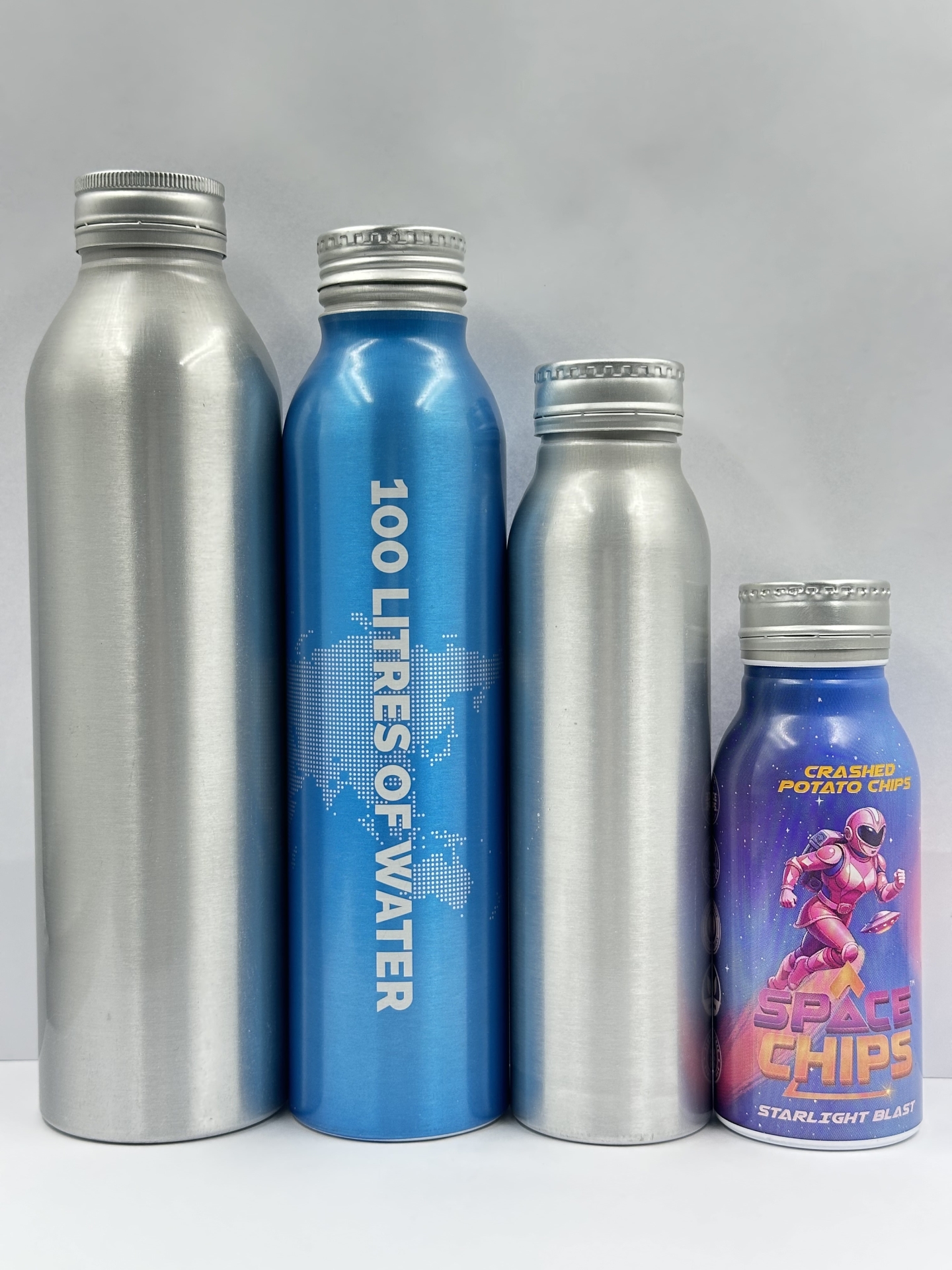
Aluminum Bottles for Food and Beverages - Certifications and Safety
In the food and beverage industry, packaging is not just an outer shell. It directly impacts safety, quality protection, user experience, and customer trust in the brand. As market requirements become stricter, choosing the right packaging solution should be treated as a key part of product development.
In this context, aluminum bottles are receiving growing attention across many food and beverage packaging applications. The value is not only in a compact look and a solid feel, but also in core factors such as certifications, technical documentation, food contact safety, and sustainability direction. For contract packers and co packing businesses, evaluating these elements early helps reduce implementation risk and builds a stronger foundation for commercialization.
The role of aluminum bottles in food and beverage packaging
Safe packaging is a baseline requirement in food and beverages
In food and beverages, safety is always the top priority. Packaging cannot be chosen only for appearance or convenience. First, it must be fit for purpose and meet food contact requirements. This is foundational because it directly affects a company’s confidence in production, distribution, and partner collaboration.
For contract packers, this requirement becomes even more critical. They are responsible not only for the packing process but also for ensuring that packaging choices align with customer standards and product direction. That is why aluminum bottles for food and beverages should be evaluated as part of a quality system, not simply as a material selection.
Aluminum bottles help shape perceived product quality
Beyond safety, packaging strongly influences how a product is perceived. In many cases, customers experience the packaging before they experience what is inside. A suitable packaging solution supports not only containment, but also a more polished, trustworthy, and higher value product image.
Aluminum bottles are often considered when a business needs packaging that feels solid, looks clean and compact, and fits different product development directions. In food and beverages, this matters even more because packaging perception is closely tied to safety perception and perceived brand investment.
Key characteristics of aluminum bottles in food and beverage applications
Packaging structure and real world performance requirements
Aluminum bottles are valued because they can support multiple practical requirements at the same time. Packaging must remain stable through filling, storage, transport, and distribution. At the same time, it must support how a brand wants the product to be positioned in the market.
In practice, aluminum bottles can be considered in many formats, and sizes such as 250 ml often draw attention because they fit many packaging and commercialization scenarios. However, the key is not the size itself. What matters is the fit between packaging and product characteristics. A strong packaging choice is based on real use needs, not only on appearance or isolated specifications.
When aluminum bottles are a suitable choice
Not every product requires the same packaging solution, but aluminum bottles often fit when a business wants to combine safety expectations, product perception, and a clearer brand direction. They can be considered when a product requires better finishing, stronger trust signals, or packaging aligned with long term goals.
In practice, the best choice depends on product type, usage behavior, distribution strategy, and end customer requirements. For co packers, evaluating suitability early helps implementation run more smoothly and reduces the risk of packaging changes later.
Certifications and technical documentation in packaging evaluation
Certifications as a basis for safety evaluation
When customers evaluate packaging for food and beverages, certifications are often one of the first items reviewed. They are not just supporting documents. They help buyers assess safety readiness, transparency, and supplier preparation at an early stage. For companies aiming to reduce risk, certifications play a clear role in decision making.
Certifications do not fully replace practical evaluation. However, when a supplier cannot provide clear or consistent documentation, trust in the packaging solution weakens. When certifications are presented clearly and supported by relevant documentation, evaluation becomes much smoother.
Technical documentation helps buyers evaluate fit before selection
Alongside certifications, technical documentation is critical in supplier evaluation. Many companies want more than confirmation that packaging can be used. They want to understand specifications, application scope, and suitability before testing or purchase. In that case, well prepared technical files make internal review and decision making easier.
This is why a call to action such as “download technical specifications” works well for this buyer group. When suppliers provide complete documents, customers can review according to their internal processes. In food and beverages, clear technical documentation is often a strong advantage at the early stage of engagement.
Food contact safety and product quality protection
Packaging must match the specific use case
A packaging solution is only suitable when it is evaluated correctly against the intended use. In food and beverages, each product has unique characteristics across filling, handling, storage, distribution, and consumption. Packaging cannot be selected in a generic way. The key is assessing whether the material and packaging structure match the product it will contain.
For contract packers, this matters even more because they manage multiple requirements across multiple brands. When packaging matches the use case, production becomes more stable, output quality becomes easier to control, and partnership reliability improves.
Packaging supports flavor retention and shelf performance
In food and beverages, sensory quality is critical. Taste, user experience, and product stability depend not only on the formula but also on the packaging solution. Suitable packaging supports shelf performance and helps maintain consistent quality through warehousing, transport, and distribution.
That is why packaging selection should not be separated from the goal of product quality protection. From this perspective, aluminum bottles are often considered a strong option because they align with both finished goods protection and consistent product experience in the market.
Sustainability in aluminum bottle selection for food and beverages
Sustainable packaging is increasingly important in supply chains
Sustainability is no longer only a brand communication topic. For many businesses, it has become part of operational direction and a factor that supply chains increasingly evaluate. Customers, partners, and markets pay closer attention to packaging choices and whether they support long term expectations.
In this context, aluminum bottles are often considered when companies want a more responsible packaging direction. Sustainability should still be balanced with real world performance. Packaging creates value only when it supports the product well and aligns with long term business goals.
Aluminum bottles support long term packaging direction
When companies evaluate packaging with a long term view, they consider more than immediate needs. They want a solution that can support product strategy, operations, and rising market expectations over time. That is why aluminum bottles can carry strategic value in many cases.
In food and beverages, this matters significantly. Packaging must meet current requirements for safety, quality, and documentation, while also supporting future demands for transparency and sustainable development. From that viewpoint, aluminum bottles are not only a material. They become part of long term product direction.
Frequently asked questions about aluminum bottles for food and beverages
Why are certifications important when choosing aluminum bottles for food and beverages
Certifications provide an early basis for evaluating safety readiness, transparency, and supplier preparation. They are a key element in packaging assessment for food and beverages.
What is the role of technical documentation in packaging selection
Technical documentation helps buyers understand packaging characteristics, application scope, and suitability for real use needs. It supports evaluation and decision making during supplier selection.
Does packaging affect product quality and sensory performance
Yes. Suitable packaging supports shelf performance, maintains sensory quality, and improves stability during distribution.
When should a business consider aluminum bottles for food and beverage packaging
Consider aluminum bottles when a company needs clear documentation, stronger safety direction, more refined product perception, and packaging aligned with long term product strategy.
Are 250 ml aluminum bottles used in real applications
Yes. In many cases, 250 ml aluminum bottles are a common format because they fit a range of packaging and commercialization needs, depending on product type and use case.
Why is sustainability becoming more important in packaging selection
Because sustainability is increasingly evaluated within modern supply chains. Sustainable packaging supports brand image and aligns better with long term business and market direction.
Conclusion
In food and beverages, packaging is a key part of product quality, safety, and market trust. With aluminum bottles, the value is not only in appearance or finishing quality, but also in the ability to meet core requirements such as certifications, technical documentation, food contact safety, product quality protection, and sustainable direction.
For businesses sourcing packaging solutions for contract packing operations, evaluating these factors correctly is essential. When suppliers provide transparent information, clear documentation, and packaging that fits real use needs, aluminum bottles become more than a packaging choice. They become part of a strategy for safer, more stable, and longer term product success in the market.