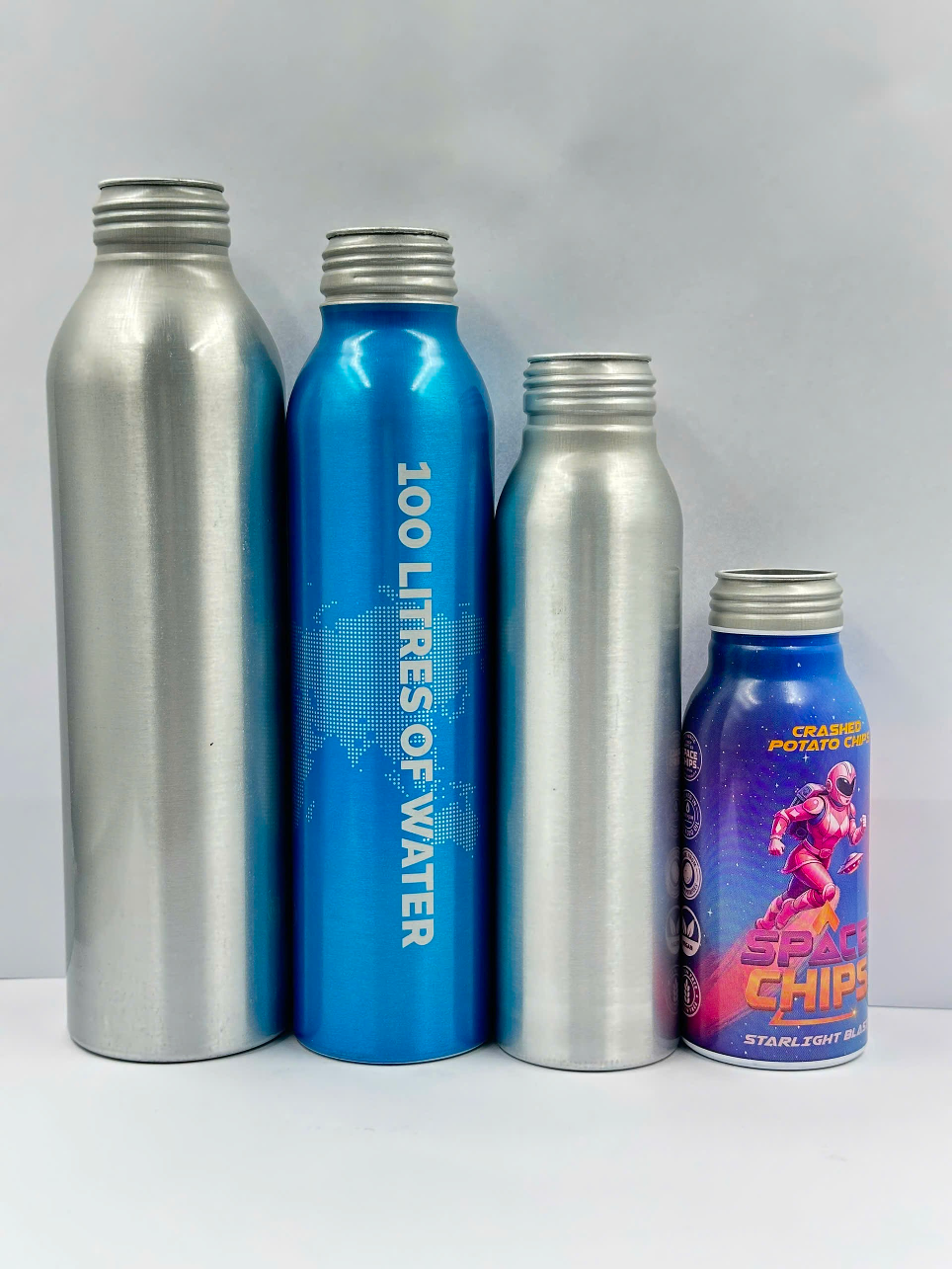
Why Food Companies Are Paying More Attention to Food Grade Aluminum Bottles
Food grade aluminum bottles are becoming a more common consideration as businesses choose packaging solutions for food and beverage products. Beyond basic containment, this packaging format is closely linked to factors such as food contact safety, support for shelf performance, perceived product quality, and long term packaging direction.
As the market places stronger focus on packaging quality and consistency, food grade aluminum bottles are increasingly seen as a serious option. For many businesses, evaluation no longer stops at external appearance. It extends to real world usability, fit with the product, and practical value throughout commercialization.
Food grade aluminum bottles are gaining attention in the food industry
Packaging is more than a container
In the food industry, packaging is no longer viewed only as an outer protective layer. Today it also affects user experience, brand image, and how products are positioned in the market. As businesses invest more in overall product quality, packaging material selection becomes a more critical decision.
This is one reason food grade aluminum bottles are receiving more attention. Instead of comparing packaging only by cost or appearance, businesses are assessing it through a wider lens, including product fit, safety direction, and the ability to support a more polished brand presentation.
Higher expectations for quality and safety
Food markets now require companies to be more cautious across every step, including packaging selection. A suitable packaging solution should support product rollout and create a stronger sense of reliability in terms of quality. This shift is driving more detailed evaluation of options such as aluminum bottles for food applications.
For many businesses, packaging is only truly suitable when it can be assessed properly against its intended use. That is why food grade aluminum bottles are moving beyond being a trial option and becoming a structured consideration in product strategy.
Food grade aluminum bottles can strengthen perceived product quality
Packaging appearance shapes product perception
Packaging is the first touchpoint between a product and the user. Before assessing flavor or the formula inside, customers often judge a product based on its external presentation. A clean, solid, and well finished package can create a positive impression immediately.
In this context, food grade aluminum bottles are often considered because they can support stronger perceived product quality. When packaging looks well executed, products tend to feel more professional, more clearly positioned, and easier to trust.
Aluminum bottles align with a polished and professional packaging direction
Many food brands need packaging that delivers function but also reflects investment and seriousness in product development. This is why aluminum bottles for food are often viewed as a good fit when businesses want to upgrade packaging presentation.
A suitable bottle can make the entire product feel more consistent and more complete. For brands aiming to build a more refined direction, including food grade aluminum bottles in packaging evaluation is a logical step.
The role of food grade aluminum bottles in protecting product quality
Suitable packaging supports storage and shelf performance
In food and beverages, storage performance cannot be separated from packaging selection. If packaging is not suitable, products may face more risk during warehousing, transport, and distribution. Packaging should therefore be evaluated for its ability to support product stability.
This is another reason food grade aluminum bottles are being considered more often. When viewed through shelf performance goals, businesses tend to look for packaging that can align better with real distribution conditions. The right solution reduces downstream operational pressure and makes rollout more stable.
Impact on stability and sensory quality
Product quality is shaped not only by formulation, but also by how the product is contained and protected. Suitable packaging supports stability, sensory performance, and overall product reliability throughout market circulation.
When considering aluminum bottles for beverages or other food products, businesses often look at how the packaging supports finished goods quality as a whole. This is why food grade aluminum bottles are increasingly evaluated in projects that require higher stability expectations.
Food contact safety is one of the most important drivers
Packaging materials must be assessed based on intended use
One common question is whether food grade aluminum bottles are safe. In practice, the key is not the general material label, but whether the packaging is evaluated correctly against the intended use. In food applications, this principle matters because every product has its own packaging requirements.
That is why when selecting food safe aluminum bottles, businesses should assess packaging within real use conditions. This approach supports more rigorous decision making and reduces choices based only on preference or appearance.
Technical files and supporting documents enable structured evaluation
Beyond the packaging itself, technical files and supporting documents are critical to the selection process. Many businesses do not only want to see a sample bottle. They need clear documentation to compare requirements before making a decision. This is what makes evaluation more structured.
When documentation is prepared clearly, it becomes easier to review suitability for real packaging needs. This is also an important factor when selecting suppliers for aluminum bottle packaging in food applications.
Sustainability is increasing interest in food grade aluminum bottles
Sustainable packaging is becoming a stronger criterion
Sustainability is increasingly part of product development direction. For many businesses, it is no longer only a marketing angle. It is becoming a practical criterion in packaging decisions. As the market places more focus on long term responsibility, packaging materials are being reviewed through a different lens.
In this context, food grade aluminum bottles are receiving more attention because they align with a more responsible and longer term packaging direction. Each business may apply sustainability differently, but clearly this factor is contributing to higher interest in aluminum packaging.
Aluminum bottles align with long term business direction
When building long term strategy, businesses look beyond today’s needs. They want packaging that fits product direction, brand growth, and changing market expectations. This is why food grade aluminum bottles are increasingly seen as a higher value option for long term development plans.
The value comes from supporting multiple goals at once, including perceived quality, shelf performance, safety readiness, and brand image direction. When evaluated properly, food grade aluminum bottles can become an important part of a company’s packaging strategy.
Key criteria when selecting food grade aluminum bottles
Fit with the product and intended use
One of the most important criteria is product fit. Not every packaging solution works for every product. When selecting food grade aluminum bottles, businesses should define intended use, product characteristics, and real rollout requirements.
This approach helps avoid choosing packaging based on trend while ignoring operational needs. When product and packaging are evaluated in the same real use context, decisions become more logical and effective.
Stability, perception, and commercialization support
Beyond technical factors, businesses should evaluate how stable the bottle remains during circulation, how it feels as packaging, and how well it supports commercialization. A suitable bottle should support storage performance while also improving product presentation in the market.
This is why food grade aluminum bottles are a strong option for many businesses. They can support both operations and product image when selected correctly.
Frequently asked questions about food grade aluminum bottles
Why are companies paying more attention to food grade aluminum bottles
Because they can support multiple priorities at once, including perceived quality, shelf performance support, safety direction, and long term packaging strategy.
Are food grade aluminum bottles safe
Businesses should evaluate the bottle against intended use and supporting documentation. This is the correct approach when selecting food safe aluminum packaging.
Which products are suitable for food grade aluminum bottles
This depends on product characteristics, usage behavior, and real packaging requirements. Businesses should evaluate by product category before selecting.
Why do companies choose aluminum bottles instead of other packaging
Many companies consider aluminum bottles because they can support perceived quality, stability expectations, and a more polished packaging direction.
Do food grade aluminum bottles support shelf performance
Suitable packaging always supports shelf performance more effectively. With food grade aluminum bottles, businesses often evaluate how well the bottle aligns with storage and distribution conditions.
What should be considered when selecting food grade aluminum bottles
Key factors include product fit, intended use, packaging perception, technical documentation, and support for long term product strategy.
Conclusion
Growing interest in food grade aluminum bottles shows that packaging decisions are being viewed more holistically. Instead of treating packaging only as a container, businesses are evaluating aluminum bottles alongside safety readiness, perceived quality, shelf performance support, and long term development direction.
When assessed correctly against intended use and real operational needs, food grade aluminum bottles can be a suitable packaging solution for many food businesses. This is a strong direction to consider for companies aiming to build products that feel more refined, perform more consistently, and deliver long term value in the market.