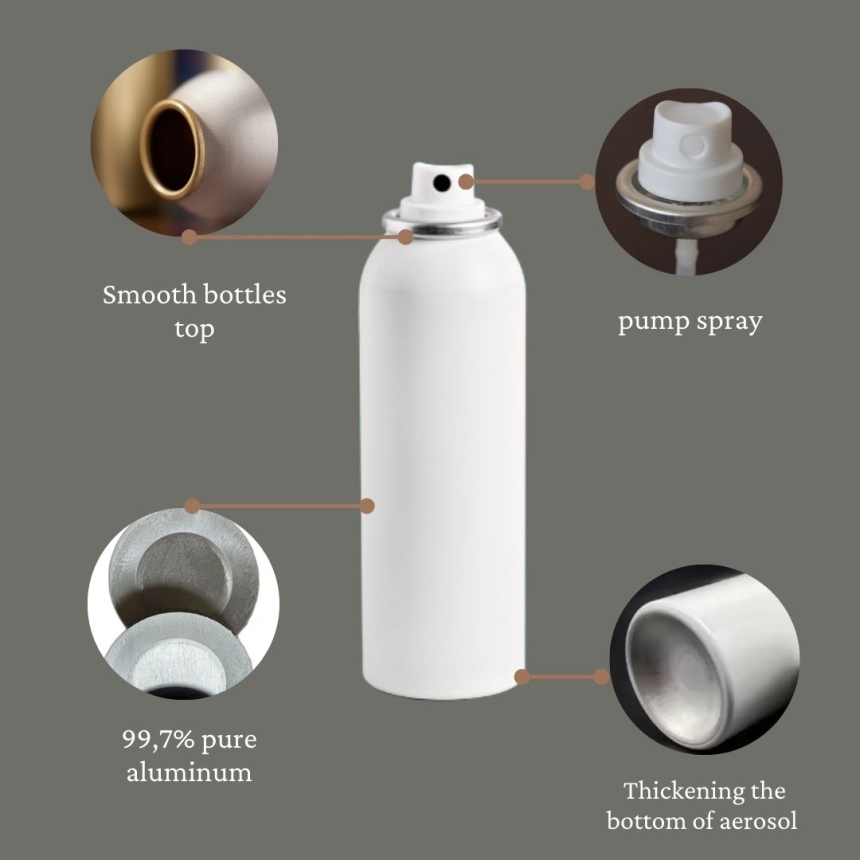
Pharmaceutical Aluminum Bottles - Export and Logistics
In pharmaceutical manufacturing and distribution, aluminum bottles are not only product containers. They are part of the operating system. As requirements for documentation, quality control, traceability, and delivery become stricter, selecting pharmaceutical aluminum bottles should be viewed within the broader context of export and logistics.
This trend reflects a more cautious approach to packaging evaluation. Instead of focusing only on format or appearance, many companies now prioritize how well aluminum bottles fit into warehousing, transportation, delivery processes, and information control across the full product lifecycle.
The role of pharmaceutical aluminum bottles in export operations
Consistency in quality and technical documentation
For products targeting export markets, aluminum bottle quality cannot be evaluated only shipment by shipment. What matters more is consistency across production runs, consistency in technical documentation, and consistency in supporting information throughout execution. This creates the foundation for stable operations in markets with higher standards and stricter documentation expectations.
In practice, clear technical documentation and stable quality are evaluated together. If either element is inconsistent, evaluation timelines become longer and trust in the supplier drops. The role of pharmaceutical aluminum bottles in export is therefore not only about the material itself, but about the ability to meet both product requirements and system level requirements at the same time.
How bottle selection affects international market readiness
A suitable aluminum bottle solution can make international rollout smoother. This shows through alignment between bottle specifications, required documentation, clarity of technical files, and the supplier’s readiness during evaluation.
As global markets demand stronger transparency and stability, pharmaceutical aluminum bottles are no longer a purely technical choice. They become a factor that directly affects whether a product can be prepared and launched in a structured, compliant way. This is why aluminum bottle solutions are being reviewed more carefully in export expansion plans.
Logistics requirements for pharmaceutical aluminum bottles
Logistics impact on storage, transport, and delivery
Logistics directly influences how aluminum bottles perform within the supply chain. A suitable bottle must work not only during filling and packing, but also support stable warehousing, transport, and delivery operations. This is especially important in pharmaceuticals, where every step must be controlled and traceable.
When aluminum bottles are selected based on operational requirements, companies can organize goods more efficiently, track batches more clearly, and maintain product condition through distribution. When selection is not aligned, pressure increases across warehousing handling, information validation, and delivery execution.
Key factors to control to reduce delivery risk
In international delivery, risk is not only about transit time. Many issues come from inconsistent documentation, unstable specifications, or incomplete batch standardization. Risk reduction should begin at the packaging selection stage and supplier evaluation stage.
Companies should focus on clarity of documentation, stability of bottle specifications, the ability to confirm batch information, and supplier readiness for compliance driven requirements. When these elements are well prepared, delivery becomes more stable and deviation risk drops significantly.
Technical files and compliance documents in supplier evaluation
Complete documentation as the basis for supplier review
When evaluating a pharmaceutical aluminum bottle supplier, technical files and compliance documents are critical. They allow companies to assess readiness, compare against internal requirements, and determine suitability before moving into deeper evaluation stages.
A complete documentation set supports faster evaluation and also reflects the supplier’s ability to work in a structured, system ready way. If information is unclear or inconsistent, review becomes harder and confidence drops. When files are organized and consistent, collaboration becomes much smoother.
Documentation readiness affects implementation timeline
In many cases, progress depends not only on production but also on whether documents are available on time. If technical specs, compliance information, or supporting product data are not ready, evaluation and rollout can slow down significantly.
This is why requests for compliance documents are increasingly standard in supplier engagement. When documentation is prepared and can be provided quickly, buyers can move internal review faster. This is especially important for export plans that require clear timelines and tighter coordination.
Traceability and quality control
Traceability value in batch management and operations
In pharmaceuticals, traceability is a core part of operational control. It supports not only batch tracking, but also data verification, record review, and faster response when quality checks or product status confirmation are required.
When traceability is supported well from the start, overall management becomes easier. When information is unclear or batch files are difficult to track, maintaining consistency becomes far more difficult. That is why traceability is a key criterion in evaluating pharmaceutical aluminum bottles.
Quality control must be clearly shown through process and documentation
Quality control only creates confidence when it is reflected clearly in processes and documents. Generic quality statements are not enough in pharmaceuticals, where every claim must be supported by verifiable data and structured records.
When a supplier can clearly explain how product quality is controlled, how quality data is organized, and how batch consistency is maintained, buyers gain a stronger basis for decision making. This is the difference between a solution that looks suitable and a solution that truly supports long term operations.
Frequently asked questions about pharmaceutical aluminum bottles
Why are pharmaceutical aluminum bottles important in export operations
Because they directly affect stable quality, technical documentation, traceability, and readiness for international market execution.
Does logistics influence pharmaceutical aluminum bottle selection
Yes. Logistics affects storage, transport, delivery, and the ability to maintain product stability through distribution.
Why is technical documentation important in supplier evaluation
Because it is the basis for comparing packaging against rollout requirements and assessing supplier readiness before moving into testing and ordering.
What is the value of traceability in operations
Traceability improves batch management, accelerates data verification, and increases efficiency in quality control.
What indicates a bottle solution is suitable for pharmaceuticals
A solution is suitable when it meets bottle specification requirements, stable quality expectations, documentation readiness, traceability needs, and export logistics demands at the same time.
Conclusion
Evaluating pharmaceutical aluminum bottles through the lens of export and logistics highlights how these bottles now play a broader role in operational systems. They affect not only packaging, but also quality control, documentation readiness, delivery execution, and stability during market expansion.
For companies seeking packaging solutions that support traceability, logistics stability, and clear rollout timelines, pharmaceutical aluminum bottles are a strong option to consider. When evaluated properly from the beginning, they can help operations remain more stable and better aligned with rising market requirements.