Convenience Beverages Are Changing How Brands Choose Bottle Formats
In today’s beverage market, purchase decisions are no longer shaped only by flavor or ingredients. The way a product appears in daily life, the level of convenience it offers, and how naturally it fits into modern routines also influence how consumers perceive it. That is why bottle format is increasingly viewed as part of the product experience, rather than only a packaging choice.
In this context, aluminum beverage bottles are becoming more relevant in convenience beverage categories. This shift is not driven by a single factor. It reflects a growing need for a smoother user experience, a product image that feels more aligned with modern lifestyles, and a more polished impression from the very first touchpoint.
New Consumption Patterns Are Reshaping Bottle Selection
Convenience beverages are no longer tied to one fixed moment of use
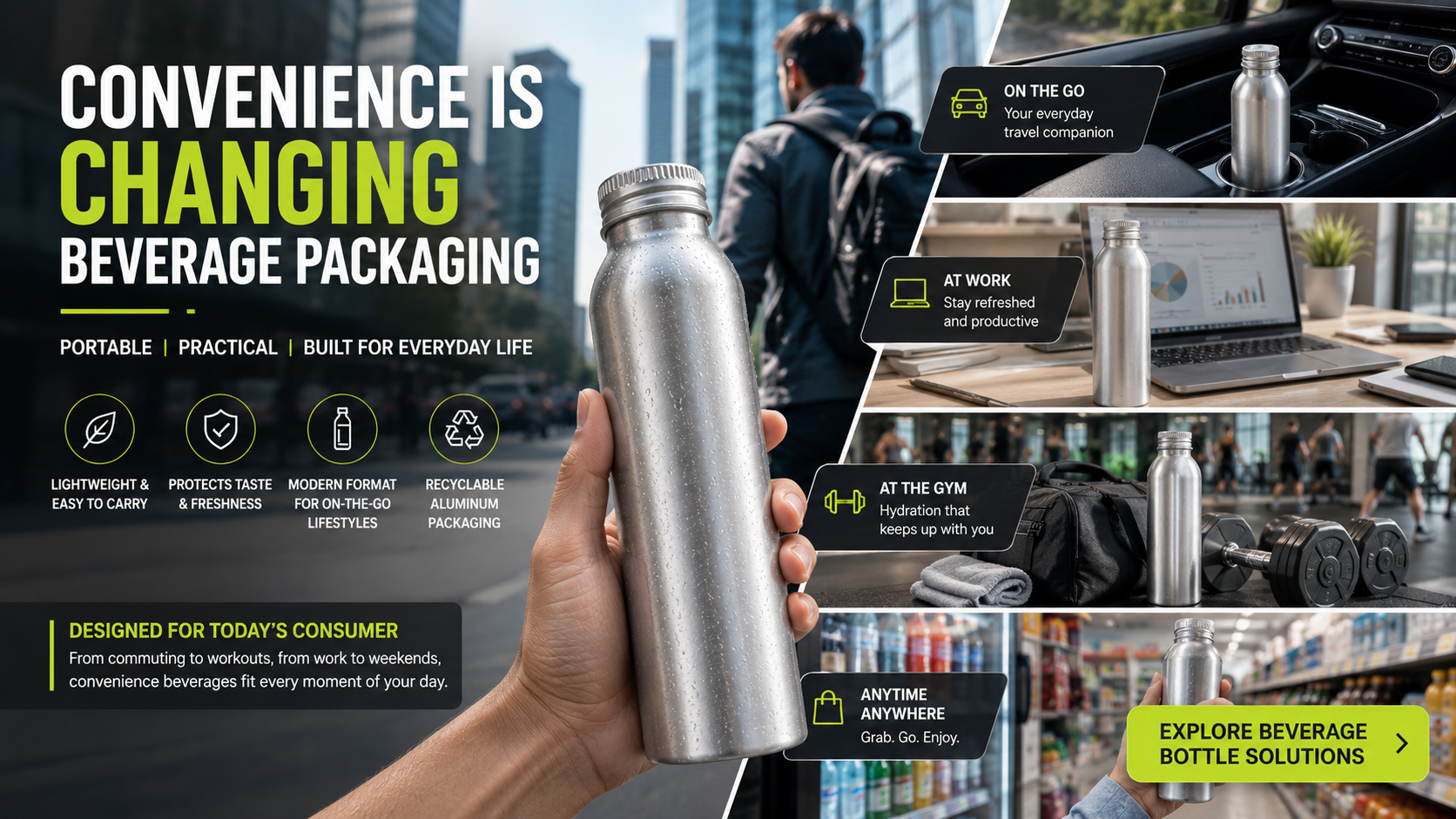
If beverages were once associated mainly with on-the-spot consumption, they are now used in far more situations. A product may be picked up on the way to work, consumed during a short break, carried through the day, or used as part of a daily routine. This means bottle format is no longer separate from consumer behavior.
As usage occasions expand, brands need to rethink how they select packaging. A suitable bottle format should work naturally across multiple real-life situations. When a product is designed to match the way people actually use it, the overall experience feels more coherent and more convincing.
Bottle format now plays a direct role in product experience
Consumers do not separate the beverage from its packaging when forming a first impression. They respond to the overall product through appearance, ease of use, and how well it fits into everyday life. In convenience beverage categories, packaging has become part of the product experience itself.
This is one reason aluminum beverage bottles are being considered more seriously by brands that want a clearer and more refined product experience. When the bottle format helps the product feel cleaner, more structured, and better suited to modern life, it also becomes easier for brands to build a stronger connection with consumers.
Convenience Is Becoming a More Important Standard
Products need to fit flexible daily routines
Today’s consumers prefer products that can fit into different moments throughout the day. A convenience beverage needs to feel easy to carry, easy to use, and suitable for changing schedules. This is becoming an increasingly important factor in purchase decisions.
From that perspective, packaging cannot remain a purely functional choice. It needs to help the product fit into the way people move, work, and live. When bottle format supports those real routines, the product has a better chance of becoming part of everyday consumption habits.
Portability is influencing packaging decisions more directly
For many convenience beverage products, portability is no longer a secondary feature. It is closely tied to product value. If a beverage is built around flexibility but the bottle format does not support that purpose well, the overall experience can feel incomplete.
When brands develop products around convenience, bottle format should be evaluated as part of product strategy. The right packaging helps the product feel more appropriate within everyday beverage categories and reinforces the convenience the brand is trying to offer.
Product Image Is Also Changing with the Consumption Context
Convenience beverages need stronger visibility in retail settings
Convenience beverages are often sold in retail environments where decisions happen quickly. Consumers look, compare, and choose within seconds. In that context, bottle format directly affects how easily a product can attract attention.
A more polished format can help a product stand out more clearly in fast-moving beverage categories. For brands that want to balance convenience with a sharper market presence, choosing the right bottle structure becomes an important part of shelf visibility.
A modern impression comes from the product as a whole
A product does not feel modern because of label design alone. That impression also comes from shape, material, visual clarity, and how the full product appears both on the shelf and across digital channels. As consumers now encounter products in both physical and online environments, the bottle itself needs to express brand direction more clearly.
In many cases, aluminum beverage bottles help a product feel more structured, more refined, and more aligned with a modern brand image. That is one reason more brands are considering this format when developing beverage products for today’s market.
Bottle Format Affects How Product Lines Are Developed
Fast-paced products need packaging that matches real usage logic
Some beverage lines are designed very clearly for quick consumption, portability, and flexible use. In those cases, bottle format cannot be separated from product positioning. If the packaging does not fit the product’s real usage logic, the experience may feel inconsistent.
When bottle format is chosen correctly from the start, product development becomes more focused and more coherent. It helps brands do more than solve a packaging task. It helps them shape a product in a way that feels more relevant to real consumer behavior.
Consistency between product and usage context creates stronger differentiation
A beverage may be well developed in terms of formulation, but if the bottle format does not fit the way consumers actually use it, the final impression may still feel incomplete. In convenience beverage categories, consistency between function, product image, and usage context matters a great deal.
That is why packaging should not be treated as a separate technical decision. It needs to be considered alongside usage behavior, target consumer expectations, and the role the product is meant to play in everyday life.
Frequently Asked Questions About Aluminum Beverage Bottles
Why is bottle format important for convenience beverages?
Because bottle format directly affects how well the product fits flexible consumption habits, how easy it is to use, and how clearly it appears in different real-life settings.
Do convenience beverages need different packaging from standard drink products?
In many cases, yes. Products built for flexible and frequent use often need packaging that better matches real consumer behavior.
Are aluminum beverage bottles suitable for convenience beverage lines?
Depending on the product and brand direction, they can be a strong option for companies looking to create a clearer image and a more coherent product experience.
Does packaging affect product recall?
Yes. Beyond flavor, the way a product appears and the overall impression it leaves also contribute to how well consumers remember it.
What should brands evaluate when choosing bottle formats for convenience beverages?
They should evaluate usage context, convenience, product image, retail visibility, and how well the format supports long-term product development.
Conclusion
Convenience beverages are changing the way brands choose bottle formats. As consumption becomes more flexible and more closely tied to real-life routines, packaging is no longer just a container. It becomes part of how the product is approached, chosen, and remembered.
For brands developing beverage lines that are modern, convenient, and closely connected to everyday life, choosing the right bottle format is an important step. In that context, aluminum beverage bottles offer a strong direction for products that need convenience together with a more polished market presence.