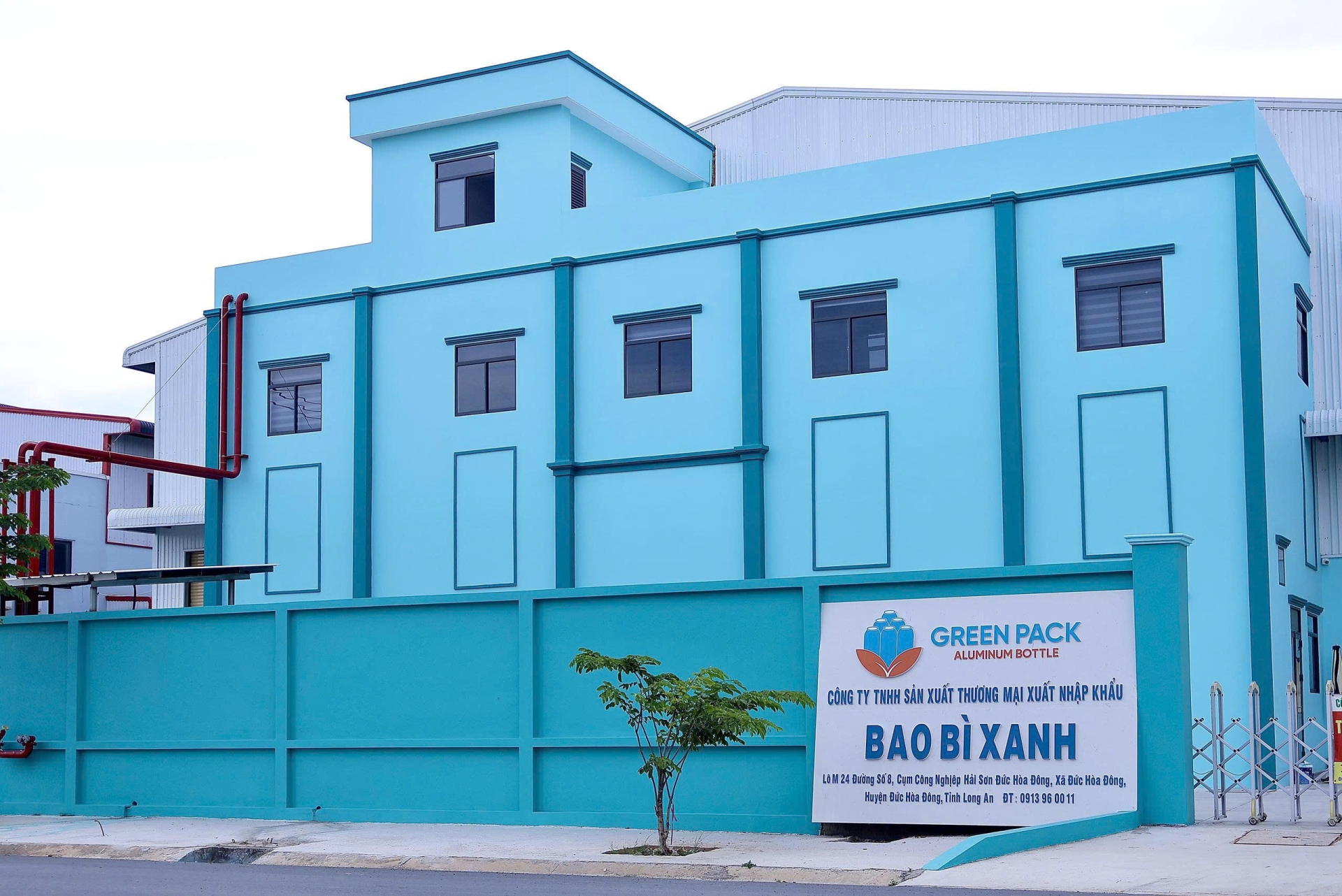
Export readiness & logistics in Vietnam factory capability & export readines
1. Export and logistics in Vietnamese factories
In recent years, aluminum bottle manufacturers in Vietnam have become increasingly integrated into global supply chains, particularly by expanding from packaging design support into full-scale manufacturing and export operations. Beyond cost advantages, many factories have gradually strengthened their technical capabilities, production organization, and logistics management to meet the growing expectations of international markets.
The 2025–2026 period marks a shift in which export and logistics functions are no longer treated as post-production support, but as core components of factory operational capability. Stable production output, on-time delivery, and effective operational risk control are now viewed as integral to overall manufacturing performance.
2. Common production capabilities in Vietnamese factories
Large-scale production capability
This is a common capability among factories operating stable, high-capacity production lines. The model is well suited for large-volume, repeat orders that require consistency across production batches. Factories with large-scale production capabilities typically focus on process optimization, unit cost control, and maintaining uniform quality throughout long production runs. In aluminum packaging manufacturing, stable technical parameters and the ability to sustain long-term output are fundamental to export-oriented operations. This model is frequently applied to food-grade aluminum bottles such as bottled beverages and beer, where repeatability, parameter stability, and long-term production continuity are critical.
Single-unit or small-batch production capability
Some Vietnamese factories have developed the capability to produce single units or small batches, primarily to support technical trials, design evaluation, or feasibility validation prior to scale-up. This model requires flexible production organization, rapid setup changes, and close coordination between engineering and production teams, particularly during pre-production or pilot phases.
Project-based production capability
Project-based production is commonly seen in factories handling orders with specific requirements, extended timelines, and multi-phase execution. Each project typically involves its own technical specifications, schedules, and control requirements. Factories with project-based capabilities emphasize schedule management, internal coordination, and change control throughout the project lifecycle to ensure alignment between design, manufacturing, and export execution.
Focused production capability
Focused production refers to a model in which factories concentrate resources on a specific product group or core technology. This approach supports deeper specialization, technical optimization, and operational stability. In aluminum bottle manufacturing, focused production is often associated with standardized processes, quality control systems, and consistent repeatability in mass production.
R&D capability
In aluminum packaging manufacturing, R&D capability` centers on translating design requirements into technically feasible manufacturing solutions. Activities typically include technical drawing development, feasibility assessment, trial support, and process optimization prior to mass production. Close coordination between R&D and production teams helps control technical parameters, minimize unplanned adjustments, and ensure stability during scale-up.
3. Basic certifications and export documentation
Factory certifications
In export operations, management system certifications are commonly used to demonstrate a factory’s internal control and organizational capability such as ISO 9001, ISO 15378 and so on. These certifications help clarify how the factory manages production, quality, environmental impact, and occupational safety. Depending on the product category and target market, additional certifications or compliance with market-specific requirements may be necessary.
Required export documentation
A standard export documentation set typically includes a commercial contract, invoice, packing list, bill of lading, and customs declaration. In certain cases, a certificate of origin is required to meet tariff or trade regulation requirements. Standardized export documentation and procedures help reduce risks during customs clearance and international transportation.
4. Common risks when factories lack export experience
When export operations are not fully standardized, several risks may arise during order execution. The most common issue is delivery delays caused by insufficient production or logistics planning. Errors in export documentation can also result in corrective procedures, extended customs clearance times, or additional warehousing and transportation costs. These issues often occur when export processes are not yet standardized or when operational teams lack hands-on export experience.
Conclusion
The 2025 - 2026 period reflects a gradual shift among Vietnamese factories from pure manufacturing models toward integrated operational systems, where production, engineering, logistics, and compliance function as parallel capabilities. Factories that develop diversified production models, strong R&D capabilities, and appropriate management systems are better positioned to operate more reliably and reduce execution risks - particularly when participating in export-oriented supply chains.